 hnmindgroup
Double-Shaft Shredder
804Double-shaft shredders for tires, plastic, metal & MSW. Low-speed, high-torque, anti-jam design, PLC control. Request quote & specs from HN Mind Group.
View detailsOptical Sorting Machine use for recyclables separation
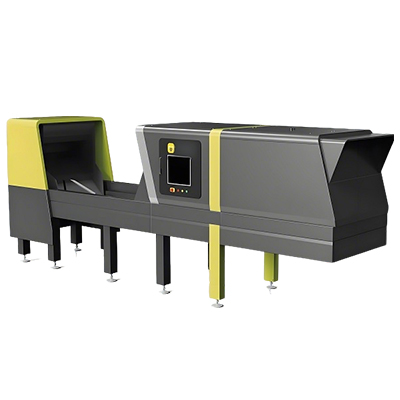
Waste Optical Sorter is an advanced machine that utilizes optical sensors to identify and sort materials based on their optical properties. This sensor-based optical sorting machine can distinguish plastic, paper, metal, glass, and other recyclable materials in mixed waste using a specialized optical sensor system or a high-resolution camera. It typically employs reflected or transmitted visible light (VIS), near-infrared (NIR) light sources, and artificial intelligence (AI) to sort materials according to their color, shape, and composition.
Product Details of Optical Sorter
High-Efficiency Optical Sorter for Waste Recycling Centers
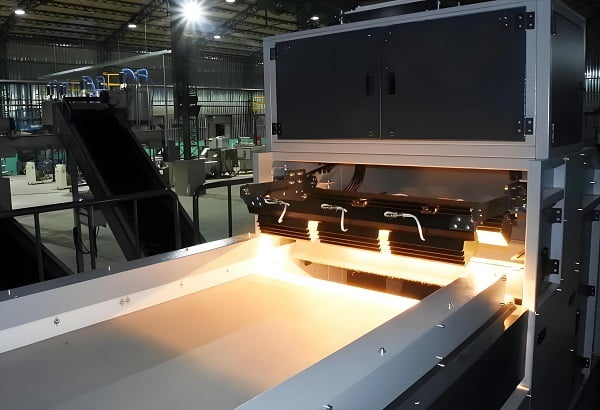
Optical sorters are automated sorting equipment based on optical principles. Their core components include a light source, optical sensors, an image processing system, and actuators. During operation, the light source illuminates the material, while the sensor captures its optical characteristics. The system rapidly analyzes and compares the material, identifying unqualified or specific types of material. These are then precisely separated using actuators (such as air jet valves).
Key Features
Waste optical sorters are known for their precision and efficiency. Key features include:
Characteristics of Optical Sorter
Working Principle of Optical Sorter
Operational Mechanism of Optical Sorter
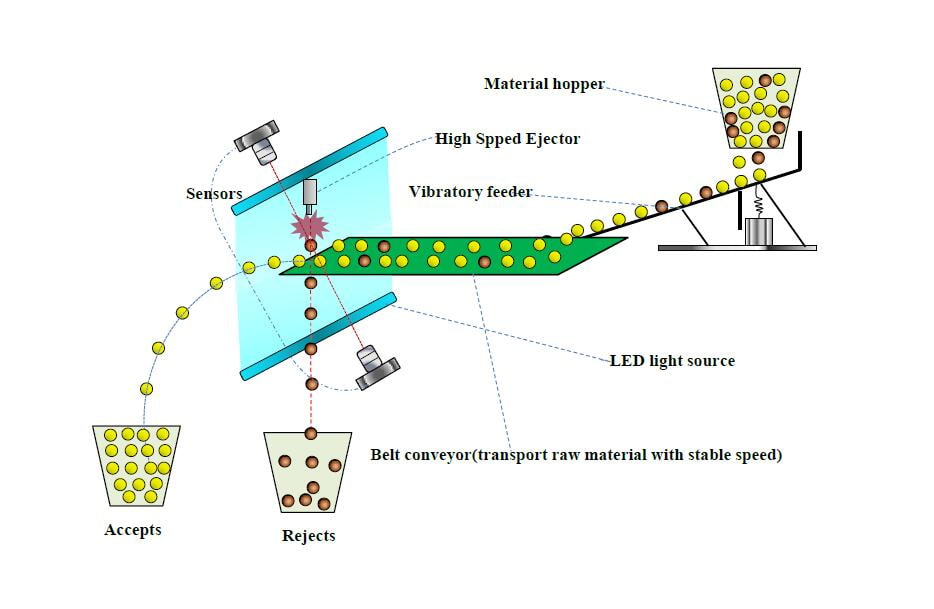
Optical sorters, with optical inspection at their core, achieve automated material sorting through a four-step process: conveying – inspection – analysis – sorting.
The detailed principles are as follows:
First, materials are transported to the inspection area at a constant speed via a vibrating feeder or conveyor belt, ensuring even distribution and no accumulation, laying the foundation for accurate inspection. Subsequently, a high-stability light source (such as an LED or laser) illuminates the material, fully revealing its surface or internal optical properties (color, shape, transmittance, and spectral information).
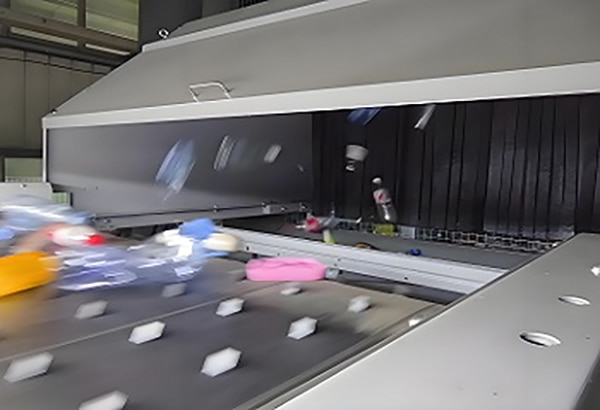
Next, a high-resolution optical sensor (such as a CCD camera or spectrometer) captures the material’s optical signals in real time, converting them into electrical signals for transmission to a high-speed image processing unit. This unit analyzes and compares the signals within milliseconds based on pre-set sorting criteria (such as color thresholds for qualified materials and defect characteristics), rapidly identifying qualified and unqualified products (or target materials and impurities).
Finally, the image processing unit sends instructions to the actuators (such as air jet valves and push rods). When the materials to be sorted reach the specified position, the actuators move precisely. Light materials are often separated by instantaneous air jets using air jet valves, while heavy materials are pushed through using push rods. Ultimately, different types of materials are efficiently diverted and the entire sorting process is completed.
Applications of Optical Sorter
Optical sorting machines rely on optical technology for automated sorting, with efficient sorting and a processing capacity far exceeding that of manual labor. They have high precision and can accurately identify subtle differences in materials. They are highly adaptable and can match materials of different shapes and types and complex production environments. They have good stability, reduce human errors, and can also lower manpower and operation and maintenance costs, contributing to intelligent production.
Common applications include:
Benefits of Using Optical Sorter
Implementing optical sorter in material separation processes offers numerous benefits:
Parameters of Optical Sorter
| Model | Width (mm) | Maximum Capacity (t/h) | Max. FeedLump Volume (m3) | Max. EdgeLength of Lump (mm) | Air Jet Nozzles | Power (kW) | Dimensions (L×W×H mm) |
|---|---|---|---|---|---|---|---|
| OSM-600 | 600 | 1–2.5 | RGB + NIR | 0.2 | 64 | 1.5 | 1800×1000×1600 |
| OSM-900 | 900 | 2–4 | RGB + NIR + AI | 0.2 | 96 | 2.2 | 2000×1300×1700 |
| OSM-1200 | 1200 | 3–6 | RGB + SWIR | 0.2 | 128 | 3.0 | 2200×1500×1800 |
| OSM-1600 | 1600 | 4–8 | Multispectral + AI | 0.2 | 160 | 4.0 | 2400×1800×1900 |
| OSM-1800 | 1800 | 5–10 | Full-Spectrum + AI | 0.2 | 192 | 4.5 | 2600×1900×2000 |
| OSM-2100 | 2100 | 6–12 | Multisensor Fusion | 0.2 | 224 | 5.5 | 2800×2000×2100 |
| OSM-2400 | 2400 | 7–14 | RGB + NIR + X-Ray | 0.2 | 256 | 6.5 | 3000×2200×2200 |
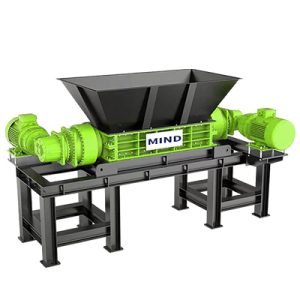
Double-shaft shredders for tires, plastic, metal & MSW. Low-speed, high-torque, anti-jam design, PLC control. Request quote & specs from HN Mind Group.
View details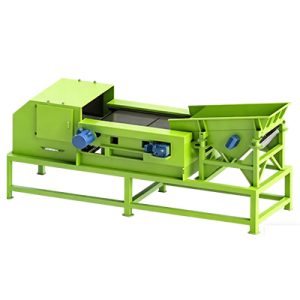
Eddy current separators for aluminum, copper & non-ferrous recovery. High field strength, low energy loss, durable. Get pricing & specs from HN Mind Group.
View details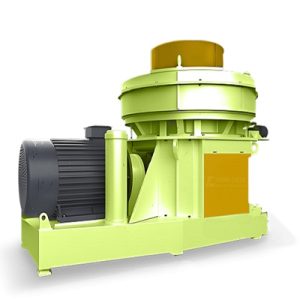
Turn MSW into RDF/SRF fuel with our making machine line. Stable output, low energy use, compact layout. Free quote & reliable plant design from HN Mind Group.
View details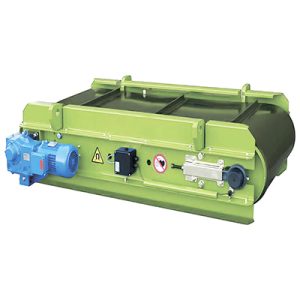
Magnetic separators for ferrous recovery in MSW, scrap & mining. Permanent & electromagnetic drums, high gauss. Request quote & specs from HN Mind Group.
View details