 hnmindgroup

RDF Production Line: Helpful Tool for Urban Waste Resource Utilization
614RDF production line turns solid waste into refuse-derived fuel. Stable output, low energy use, automated control. Free quote & plant design from HN Mind Group.
View detailsSize separation can leave film, paper and rigid containers in the same stream. Here is how to decide whether a second, different separation step will actually help your line.
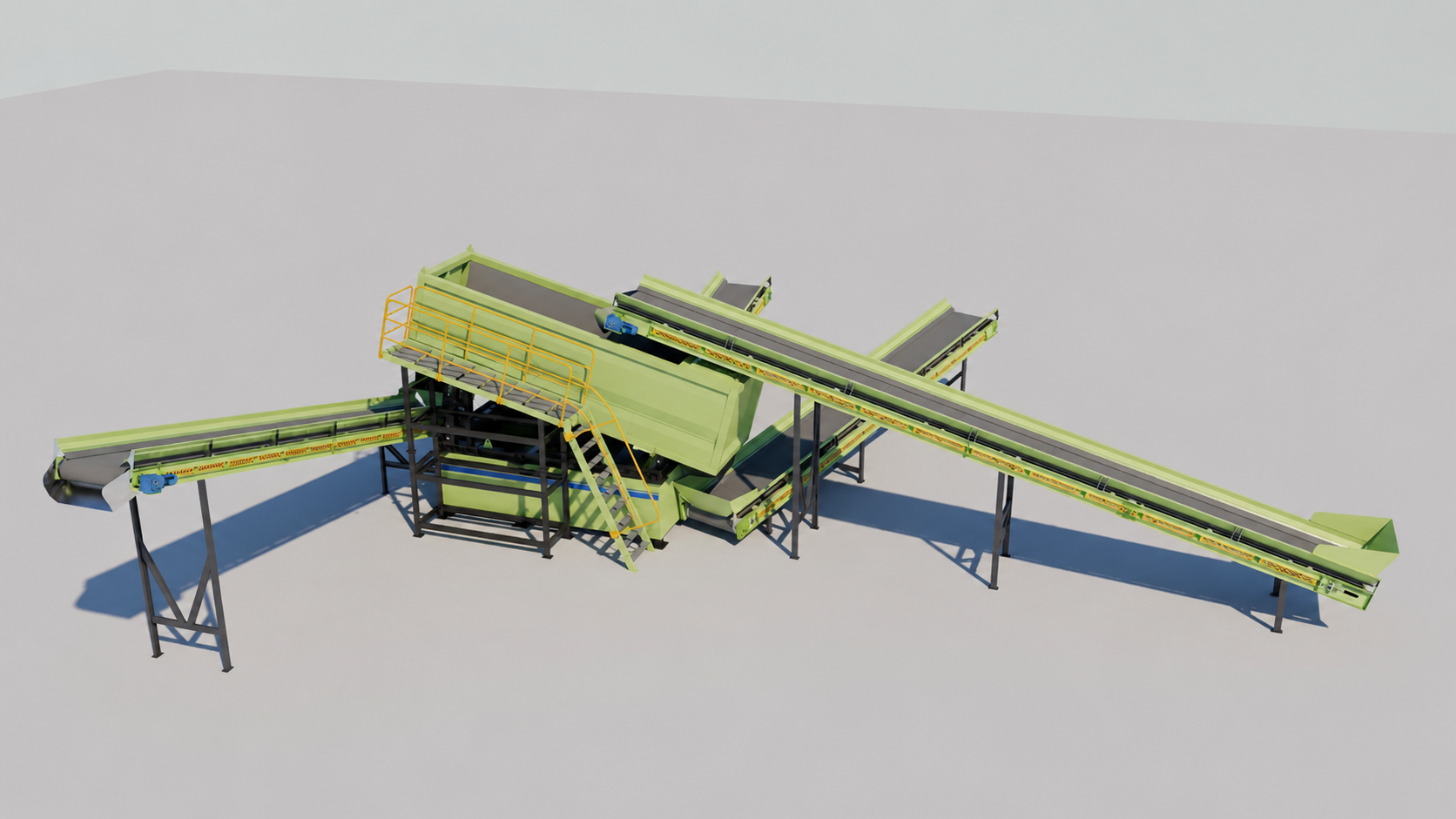
Your trommel is running. Fines are being removed. Yet the conveyor leaving it still carries film, cardboard, bottles and cans together. Before replacing the screen—or adding another machine—it helps to ask what separation task remains unfinished.
A trommel can be doing its job correctly while producing a stream that still needs further sorting. The important distinction is particle-size classification versus separation by material behaviour.
A ballistic separator is worth evaluating when a size-classified stream still needs to be divided into flat, flexible material and rolling, rigid material for different downstream routes. It is not an automatic upgrade for every trommel-based line.
A trommel moves material through a rotating perforated drum. Items able to pass through the openings leave as an undersize fraction; retained material travels onward. A drum with different screening sections can produce several size groups—not just two outputs. Its task is size classification: it controls the size range presented to the next process.
Passing or remaining on a screen does not, by itself, identify a material as paper, plastic or metal. A piece of film and a container may both remain in the selected size fraction. Their subsequent behaviour can still be very different.
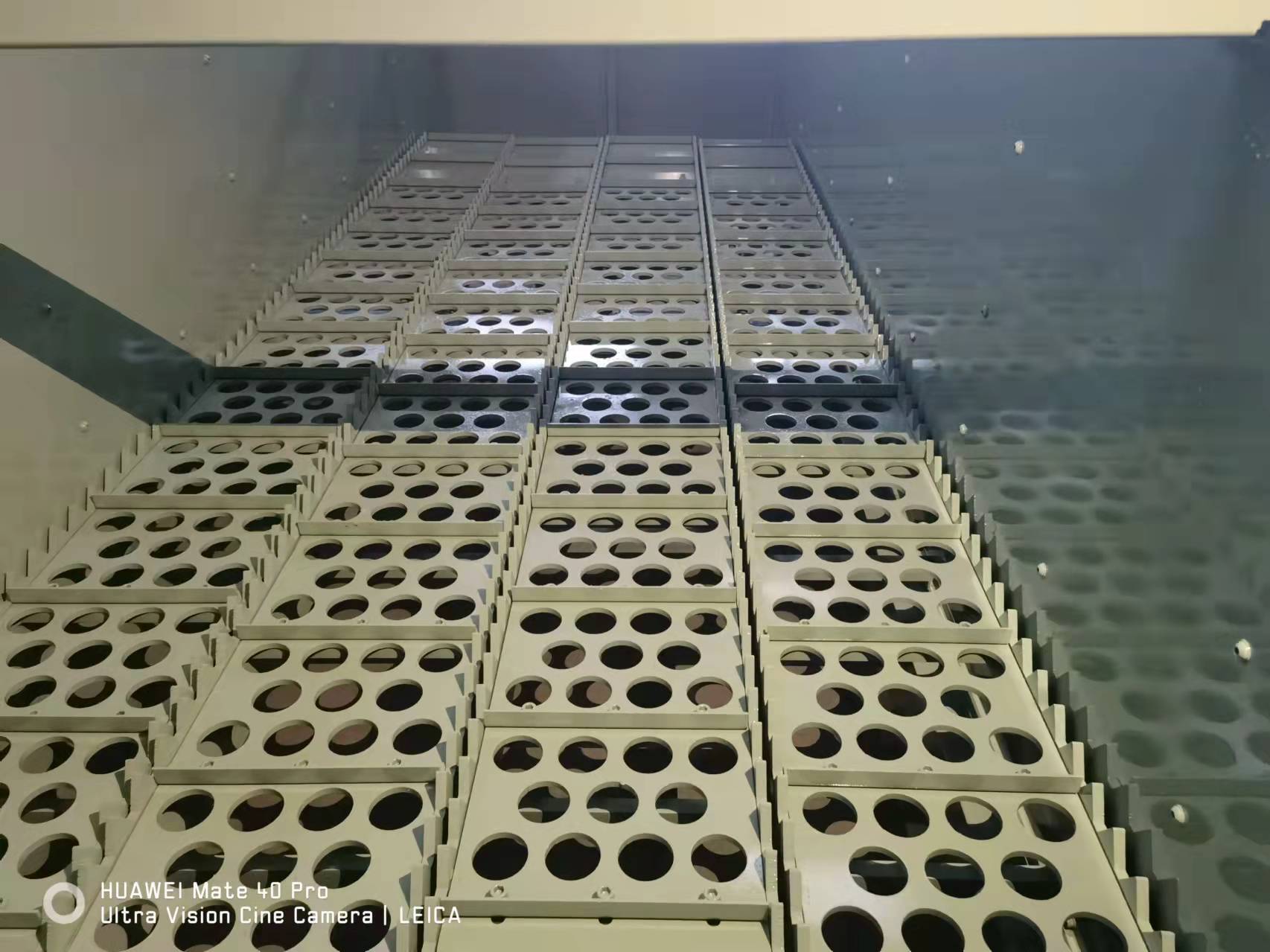
An inclined deck of moving paddles encourages flat, flexible items and rolling, rigid items to follow different paths. These are commonly called the 2D and 3D fractions. Perforated paddles can also remove a screen-underflow fraction. Shape, surface characteristics and the condition of the material affect how it responds. The deck does not identify a polymer, metal grade or paper grade; it creates physical streams for the next process to handle.
The labels describe behaviour, not a chemical analysis. The 2D stream may contain both film and paper; the 3D stream may contain several plastics, cans and other objects. Further sorting is normally needed when the objective is a specific saleable material.
| Question | Trommel screen | Ballistic separator |
|---|---|---|
| Main task | Classify a stream by effective particle size. | Split material by behaviour on a moving deck. |
| Typical streams | Undersize and retained material; additional size cuts where configured. | 2D, 3D and, with perforated paddles, a fine fraction. |
| What it does not establish | The identity or purity of each material type. | A polymer-specific, metal-specific or finished-fuel specification.|
| Why retain it in a line? | The next stage needs a controlled size range. | The next stages need separate flat and rigid streams.
The strongest reason to use both is a clear requirement at the next process. Consider a size-classified packaging stream that still contains loose film, paper and rigid containers. If the plant needs separate routes for flexible packaging and containers, a behavioural split may be useful before more selective recovery.
Separating the flat fraction from the rolling fraction creates an opportunity to configure each route around its own material. One may need film and paper sorting; the other may need container and metal recovery. That opportunity has value only if the conveyors, downstream equipment and output destinations can use the split.
Lightweight material can require different handling from rigid containers. On a high-speed belt, loose film can lift, overlap or move unpredictably, while bottles and cans tend to roll or remain more stable. A separate 2D route allows the receiving belt, air control and any later sorting equipment to be arranged for light material. Adding a separator without checking the receiving belt and its capacity may simply move the bottleneck.
A first size cut and a later behavioural split can be complementary. But the fines-removal duties need scrutiny. If the trommel has already removed the relevant undersize material effectively, an identical downstream cut may add little. Residual fines, newly released particles or a deliberately different aperture may justify a further cut; this needs to be demonstrated on the actual feed.
The diagram below shows one concept for a prepared mixed-recyclables stream. It sends a selected trommel fraction to ballistic separation. The other trommel outputs follow their own routes. It deliberately does not assign an aperture or throughput: those decisions belong to the feedstock assessment.
Screen underflow
Assess composition and
its own treatment route
Flat, flexible material
Further film / paper sortingRolling, rigid material
Further container / metalResidual / released fines
Separate assessmentBagged, attached or entangled items cannot be assumed to behave like the individual materials inside them. A wet paper-and-film clump is a different test material from loose dry film. Before selecting the sequence, establish whether the feed needs opening, removal of unsuitable objects or other preparation. Do not assume that every line needs shredding, or that shredding will always improve the split.
Machine design also matters. Deck inclination, paddle perforation and surface, feed distribution, width and length can all affect how material moves through a separator. Select these details from the sorting duty and the actual feed, rather than from a generic capacity figure. A configuration that suits loose dry packaging cannot be assumed suitable for wet, attached or heavy mixed material.
An additional machine creates capital cost, transfer points and maintenance work. It should solve a demonstrated process problem. Hold off on specifying a ballistic separator when:
A different pre-treatment method, a change to feeding, or another separation technology may be more appropriate. The comparison should start with the required output, then work backwards through the process.
A short video of a machine running is a useful introduction. A retrofit decision needs a more complete record. Use the following questions to structure a trial and a layout review.
Record where it came from, its size range, moisture condition, composition and preparation. Include normal variation instead of testing only the easiest material.
Measure the selected trommel stream, including peaks. State whether the flow is in m³/h or t/h and record bulk density where converting between them. Do not size the second machine from the total plant intake alone.
Collect timed samples from all relevant streams. Measure both the share of target material recovered and its concentration in the target output. Include valuable material lost to the other fractions.
Check transfer heights, conveyor loading, support structure, power, access, dust management and the installation window. Reserve space for safe inspection and maintenance.
Compare the baseline and proposed route using matched feed conditions. Include saleable output, reject treatment, energy, cleaning, wear parts and downtime—not just the separator’s nominal capacity.
Use a consistent mass basis and representative samples. A high figure for one measure does not establish the other.
Maintenance deserves its own line in the assessment. Review access to the deck, paddles, drive, lubrication points and discharge areas. Confirm which wear parts are included, how they are replaced, what lifting or isolation procedures are required, and which spares should be held on site. Do not treat a general “low-maintenance” claim as a substitute for a documented maintenance scope.
Sometimes a process can be redesigned around a different screening duty, but replacement is not a like-for-like assumption. Compare the feed limits, required size cuts, loading and output routes. The presence of screening holes in both machines does not make their overall duties identical.
No. A useful 2D/3D split, suitable feed and a downstream route that benefits from the change should all be demonstrated. An existing line that already meets its requirements may not need another separator.
No such result follows from the machine type alone. Film and paper can report together; different rigid materials can report together. Product quality depends on the entire process and the receiving specification. Ballistic separation alone does not certify a polymer grade, fuel specification or clean-soil output.
The decision is clearest when each machine has a defined job: the trommel establishes a useful size range, and the ballistic separator provides a behavioural split that the next stages can use. Where that second duty is real—and verified with representative feed—the combination deserves consideration.
Before requesting a configuration, put the current flow diagram, selected-stream feed data, output requirements and site constraints in one brief. Those details are more useful than asking which machine is “better” in isolation.
The terms below describe the physical behaviour used for process planning. They are not material-quality specifications.
All diagrams are explanatory and not to scale. The process route, throughput, recovery, purity and financial result of a real installation depend on feed conditions, configuration, downstream equipment and the measurement method agreed for that project.

RDF production line turns solid waste into refuse-derived fuel. Stable output, low energy use, automated control. Free quote & plant design from HN Mind Group.
View details
Practical guide for recycling businesses on choosing the right waste paper baler: capacity, bale size, power & ROI. Get expert advice from HN Mind Group.
View details
Industrial double shaft shredder for waste, tires & metal. Low-speed high-torque, anti-jam PLC control, 24/7 duty. Request quote & specs from HN Mind Group.
View details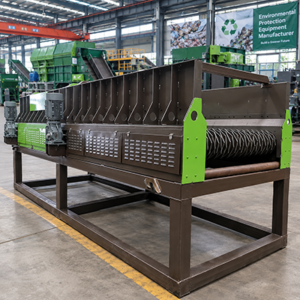
Disc screen vs trommel: compare screening efficiency, clogging and upkeep for lines. Find right star screen for your plant. Free quote from HN Mind Group.
View details